
Ice & Water Shield: Why High-Temp Protection Matters
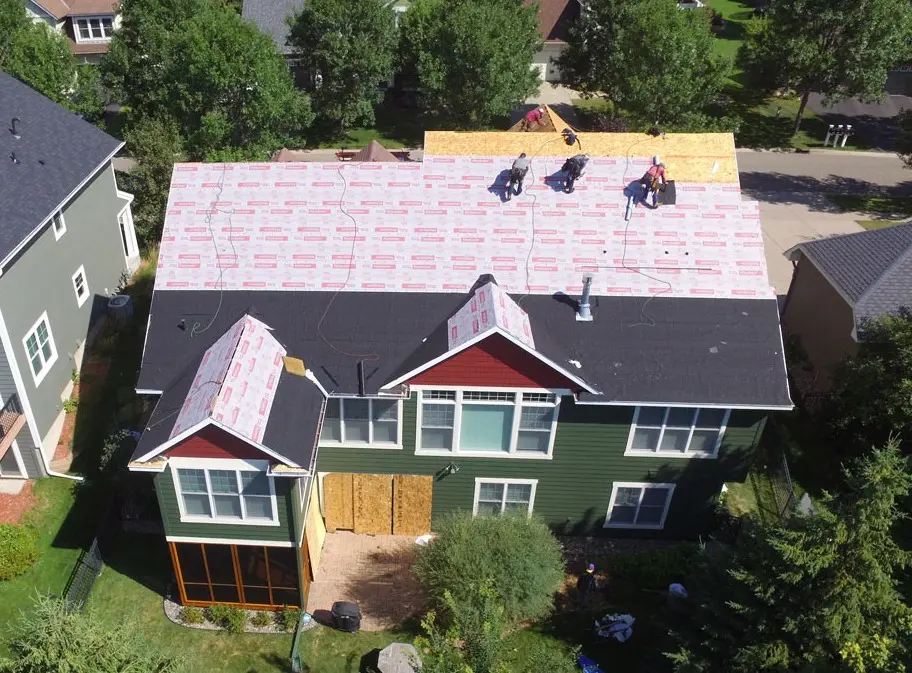
Skipping ice-and-water shield, or installing it incorrectly, sets a roof up for water intrusion that costs far more than the material itself. This underlayment is the last line of defense against ice dams and wind-driven rain at the roof’s most vulnerable points: valleys, penetrations, and step flashing. Homeowners rarely see the problem until water shows up on a ceiling or wall, by which point the fix is no longer a $300 line item.
Costs Of Skipping Ice Shield
Without proper ice-and-water shield, water backs up behind ice dams and finds its way under shingles, into the decking, and eventually into attic insulation and interior drywall. That kind of intrusion can mean replacing rotted sheathing, repainting ceilings, and dealing with insulation that has to be pulled and redone. Adding this protection at every penetration and step flashing point runs about $300 per job, a cost some contractors skip to keep their bid lower. That $300 is a fraction of what it costs to open up a ceiling, dry out an attic, and rebuild a section of decking after a winter of ice dam damage.
The math only gets more lopsided over time. A roof lasts 25 to 50 years depending on the shingle, and ice dams are a near-annual event in this region once temperatures start swinging above and below freezing in late winter. Paying for proper protection once, at installation, is a one-time cost. Repairing water damage from a roof that lacked it can become a recurring expense every time conditions line up the same way again.
Moisture Risks Beyond Ice Dams
Ice dams are not the only scenario where this underlayment earns its keep. Roof penetrations like plumbing jacks, bath vents, and kitchen vents are common leak points regardless of the season, since flashing alone does not always hold a perfect seal over time. Wrapping these penetrations in a course of high-temp shield, along with sealant, gives the roof a backup barrier if the flashing ever fails. The same goes for step flashing along walls and chimneys, where wind-driven rain can work its way in during a heavy storm.
We have also run into structural issues that compound moisture risk, like a pipe boot installed in a roof valley on a previous addition. Valleys concentrate water flow, and putting a penetration where it does not belong will only guarantee a future leak. Correcting problems like that, along with using ice-and-water shield everywhere it belongs, is part of why we handle every Storm Damage claim as a full inspection rather than a quick patch job.
High-Temp Versus Standard Shield
High-temp ice-and-water shield holds up under the heat that builds beneath dark shingles in direct sun, while standard-grade product can soften and lose its seal in those conditions. The high-temp version has a granular, sandpaper-like surface and a fully adhered backing that bonds directly to the roof deck, creating a tighter, more durable seal than lower-grade alternatives. Because insurance carriers price a claim around code minimums, not best practices, a policy quote often will not call out high-temp shield by name or require it outright.
That gap between what insurance pays for and what actually protects a roof long-term is exactly why we do not let the estimate dictate the materials. Every roof we install or replace gets high-temp shield around penetrations and step flashing, and extended coverage past the interior heated wall line, regardless of what a claim specifies. It is a standard we hold on every job, whether it is covered by insurance or paid out of pocket, because it is how we would want our own roof built.
Where The Shield Goes On A Roof
Placement matters as much as product grade. On every project, we install ice-and-water shield around all roof penetrations with roughly a three-foot by three-foot course of coverage, and along the full length of any step flashing next to walls or chimneys. It also always extends a minimum of 24 inches past the interior heated wall line, and further on our upper-tier systems, to keep pace with how far ice dams can back water up under shingles. These are the same standards we follow on every Roof Replacement, since we strip every roof down to the decking regardless of whether the project is billed as a replacement or a new installation.
That consistency is part of why we treat installation and replacement as the same process rather than two different service tiers. Skipping steps to save time on a “simple” reroof is exactly how gaps in protection end up in a finished roof.
Working With A Local Roofer
Revive Roofing & Restoration, based in Hudson, builds every roof to this same standard because we are not chasing the next storm out of state; we are staying in this market to stand behind the work. Homeowners get one dedicated project manager from the first inspection through final cleanup, so questions about materials like high-temp shield get answered by the same person who has been on the roof, not a call center. If you want a straight answer about what protection your roof actually has, or does not have, reach out through our Contact Us page or start with a Free Estimate.